
Table of Contents
🕯️ Introduction - Why Thomas McCauley Still Fascinates
When people think of the Titanic, the same names and images tend to surface: the captain on the bridge, wealthy passengers in first-class salons, lifeboats disappearing into the dark Atlantic night. Yet, beyond these well-known figures, certain lesser-known names continue to attract growing curiosity. Thomas McCauley is one of them.
Across English-language searches, questions such as “Thomas McCauley Titanic”, “Titanic gym instructor”, or “who ran the Titanic gym” appear again and again. This interest is not accidental. McCauley is directly linked to one of the ship’s most surprising features: the Titanic gymnasium, a symbol of modernity and luxury that feels almost ahead of its time in 1912.
The idea that a transatlantic liner offered a fully equipped gym, complete with mechanical exercise machines and a dedicated instructor, continues to fascinate historians and enthusiasts alike. It raises natural questions: Where was the Titanic gym located? Who was allowed to use it? What kind of machines did it contain? And perhaps most poignantly, what happened to the man responsible for it during the disaster?

Another reason his name continues to surface lies in the frequent confusion surrounding its spelling. Variants such as McAuley or McColey regularly appear in databases and search results, blurring his identity and fueling further investigation. Each discrepancy invites new questions and keeps his story alive in the digital age.
By retracing who Thomas McCauley was, what his job involved, and how his fate unfolded on the night of April 15, 1912, we shed light on a discreet yet meaningful figure. His story reminds us that the Titanic was not only shaped by its most visible characters, but also by those who worked quietly behind the scenes, contributing to the ship’s unique promise of comfort and modernity.
➡️ Step into the legend with the Titanic bracelet, a timeless jewel echoing the elegance and emotion of the iconic voyage.
👤 Who Was Thomas McCauley? His Background and Role on Board
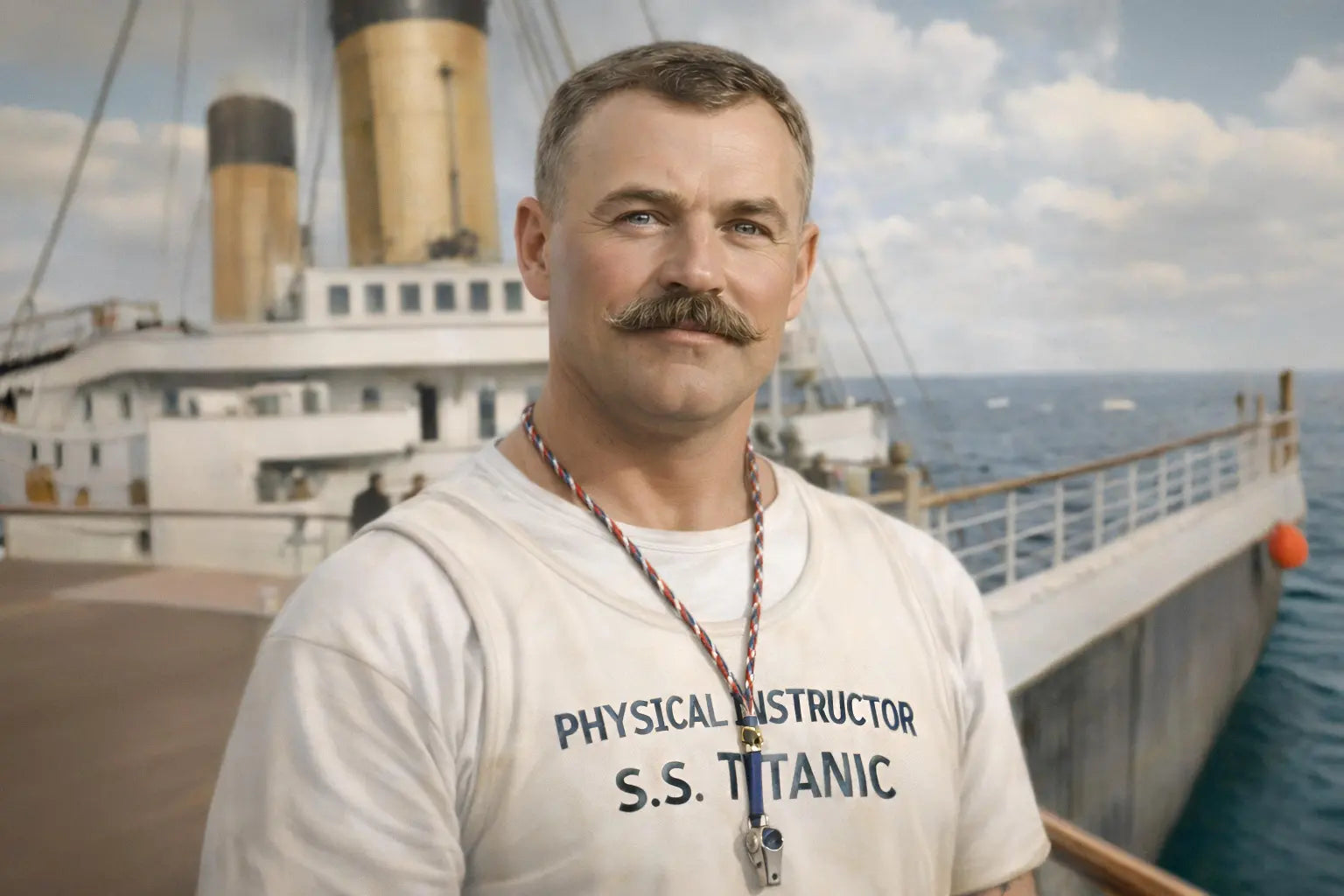
Thomas McCauley was neither a wealthy passenger nor a high-ranking officer on the Titanic. His name does not appear in dramatic bridge scenes or famous survivor accounts. And yet, he was an integral part of the ship’s daily life, listed officially among the crew as a physical educator, a role that was both rare and forward-looking in 1912.
Very little is known about McCauley’s early life, a common situation for many crew members whose stories were never widely documented. What we do know comes primarily from crew lists, shipping records, and later historical reconstructions. These sources confirm that he was employed specifically to manage and supervise the first-class gymnasium, one of the Titanic’s most modern and unexpected facilities.
Unlike stewards, engineers, or deck officers, Thomas McCauley did not contribute directly to navigation or ship operations. His work belonged to a different sphere: comfort, leisure, and physical well-being. This distinction placed him in a unique position on board, serving an elite group of passengers while remaining largely invisible in traditional maritime hierarchies.

As the gym instructor, McCauley’s role required both technical knowledge and social discretion. He was expected to explain unfamiliar machines, guide exercises, and adapt sessions to passengers who often had little experience with physical training. At the same time, he had to embody the calm professionalism expected in first-class spaces.
This combination of responsibility and anonymity helps explain why Thomas McCauley remains such an intriguing figure today. He represents a side of the Titanic that is rarely explored: the everyday routines, innovations, and quiet services that shaped life on board long before the iceberg appeared.
➡️ Who was Captain Edward John Smith? Dive into the story of the Titanic’s captain, his career, leadership, and lasting historical impact.
🏋️ What Was His Job on the Titanic? The Meaning of “Physical Educator”
The job title associated with Thomas McCauley on the Titanic, physical educator, often raises questions. In modern terms, it does not correspond exactly to a fitness coach, a personal trainer, or a sports instructor. In 1912, this designation carried a more specific and socially coded meaning.
At the turn of the 20th century, physical education was closely linked to ideas of health, posture, discipline, and refinement. Exercise was not about performance or athletic competition, but about maintaining balance, elegance, and bodily control. This philosophy was particularly popular among upper-class passengers, the very audience the Titanic was designed to serve.
On board, McCauley’s role was to oversee the use of the ship’s first-class gymnasium, an exceptional feature for a transatlantic liner of the era. His responsibilities included demonstrating how the machines worked, assisting passengers during their sessions, and ensuring that exercises remained safe and appropriate for each individual.

Many of the gym’s devices were unfamiliar even to well-traveled passengers. Mechanical rowing machines, stationary bicycles, and the famous electric “horse” and “camel” required explanation and supervision. Without guidance, these machines could easily be misused. McCauley’s expertise was therefore essential to the experience.
Beyond technical instruction, the role of physical educator also carried a strong social dimension. McCauley needed to interact with wealthy passengers discreetly, adapting his tone and advice to people accustomed to comfort and personal attention. His presence contributed to the impression that the Titanic was not merely a ship, but a floating luxury resort.
This is why modern searches such as “Titanic gym instructor”, “physical educator Titanic”, or “Thomas McCauley job on Titanic” continue to surface. His position embodies the ship’s ambition to blend technological innovation with an elevated lifestyle, even in areas as unexpected as physical exercise.
➡️ Discover the Titanic Ring, a graceful tribute to eternal devotion, born from the ocean’s most powerful legends.
🚢 The Titanic Gymnasium - Where Was It Located and What Was It Like?
The Titanic gymnasium was one of the ship’s most surprising and forward-thinking features. In 1912, the idea of a dedicated fitness space on a transatlantic liner was still unusual, even revolutionary. Yet for the White Star Line, this gym was a clear statement: the Titanic was meant to offer not only transport, but a refined lifestyle at sea.
The gymnasium was located on the Boat Deck, one of the highest and most prestigious areas of the ship. Positioned near the first-class accommodations and close to the Grand Staircase, it was easily accessible to wealthy passengers without requiring them to pass through technical or crew-only sections of the vessel.
Large windows lined the gym, allowing natural light to flood the room during the day and offering views of the open ocean. Exercising while watching the Atlantic roll by reinforced the feeling of exclusivity and modern comfort. This was not a noisy or crowded space, but a calm, controlled environment designed for discreet physical activity.

The atmosphere inside the gymnasium reflected Edwardian ideals of elegance and restraint. Polished wood, brass fittings, and carefully arranged machines gave the room the appearance of a private club rather than a training hall. Every detail was intended to reassure first-class passengers that exercise could be practiced without sacrificing dignity or social standing.
Ironically, the gymnasium’s location on the Boat Deck placed it only a short distance from the lifeboats. On the night of April 14, 1912, this space dedicated to health, balance, and progress stood just meters away from the scenes of confusion and evacuation that would soon unfold.
Today, frequent searches such as “Where was the Titanic gym located?” or “Titanic gymnasium Boat Deck” reflect ongoing fascination with this unique room. It represents a striking contrast between the ship’s promise of modern luxury and the fragile reality that ultimately claimed it.
➡️ From myth to reality: explore Jack Dawson’s Titanic story, his supposed age, fate, and the secrets that still fascinate today.
⚙️ Machines and Equipment - Bicycle, Rower, Electric Horse and Camel
The Titanic gymnasium owed much of its fascination to the machines it contained. In 1912, these devices were considered cutting-edge technology, blending mechanics, electricity, and early ideas of physical conditioning. For first-class passengers, they offered a rare opportunity to exercise while crossing the Atlantic in comfort.
One of the most popular pieces of equipment was the stationary bicycle. Unlike outdoor cycling, this machine allowed passengers to pedal at a controlled pace while remaining indoors, often positioned near large windows. The experience combined gentle physical effort with the calming view of the sea, perfectly suited to an elite clientele unaccustomed to strenuous exercise.
The gym also featured a rowing machine, inspired by the movements of traditional rowing. This apparatus worked the arms, back, and legs simultaneously, offering a full-body workout long before such concepts became mainstream. Under the supervision of Thomas McCauley, passengers could practice rowing motions safely, without risk of overexertion.
What truly set the Titanic’s gym apart, however, were two machines that quickly captured the imagination of travelers: the electric horse and the electric camel. These devices were designed to simulate horseback riding, a popular activity among the upper classes of the Edwardian era.

The electric horse reproduced a gentle galloping motion, intended to improve posture, balance, and core strength. The electric camel offered a slower, rolling movement, believed to benefit spinal flexibility and overall alignment. Both machines reflected contemporary beliefs that controlled motion could enhance health while preserving elegance.
Operating these machines required careful supervision. Thomas McCauley adjusted the settings, explained proper posture, and ensured that each session remained comfortable and appropriate for the passenger’s age and physical condition. His role was essential in transforming advanced machinery into a refined, reassuring experience.
Today, searches such as “Titanic electric horse machine”, “Titanic gym equipment”, or “Titanic exercise machines” reveal ongoing curiosity about these early fitness innovations. They stand as symbols of a ship that sought to embody progress, sophistication, and modern living, even in the middle of the ocean.
➡️ Step into history with the Titanic jewelry collection, refined pieces echoing romance, elegance, and maritime legend.
💷 Price and Access - Who Could Use the Titanic Gym?
Despite its reputation for luxury, access to the Titanic gymnasium was not automatically included in a first-class ticket. In 1912, structured physical exercise was still considered a specialized service, closer to a private club experience than a standard onboard amenity.
First-class passengers who wished to use the gym were required to pay an additional fee. Historical records indicate a cost of approximately one shilling per session. For the wealthy clientele aboard the Titanic, this amount was modest, yet it reinforced the exclusive nature of the facility.
Only first-class passengers were permitted to enter the gymnasium. Travelers in second and third class had no access, regardless of interest or physical ability. This strict separation reflected the social structure of the time, where leisure, wellness, and guided exercise were privileges reserved for the upper classes.
Sessions followed a defined schedule, typically during the morning and early afternoon. Thomas McCauley managed the flow of visitors, ensured that machines were used properly, and adapted exercises to suit each individual. The atmosphere was calm and orderly, far removed from the intensity of modern fitness centers.

Beyond its practical function, the gym served as a social space. Businessmen, aristocrats, and well-traveled passengers met there, exchanged conversations, and shared an interest in modern ideas of health and self-discipline. The presence of a dedicated instructor added legitimacy and reassurance to the experience.
This model of paid access helps explain why the Titanic gym continues to attract attention today. Searches such as “Titanic gym price”, “who could use the Titanic gym”, or “Titanic first class facilities” reflect a fascination with how luxury was structured and monetized aboard the ship.
The gymnasium was not merely a place to exercise. It was a carefully designed symbol of status, modernity, and controlled leisure, perfectly aligned with the image the Titanic sought to project on the eve of its maiden voyage.
➡️ From royal jewel to modern legend, uncover the Hope Diamond’s history, price, real owners, and Titanic-related myths.
❄️ The Night of the Disaster - Where Was Thomas McCauley?
When the Titanic struck the iceberg late on the night of April 14, 1912, Thomas McCauley was not stationed on the bridge, nor assigned to lifeboat operations. As the ship’s physical educator, his role placed him outside the core command structure of the crew.
As orders began circulating and stewards moved through the corridors, the atmosphere aboard the ship changed rapidly. Crew members without direct evacuation duties were often left with limited instructions, expected to remain calm, assist passengers if needed, and follow commands as they emerged.
No surviving testimony places Thomas McCauley at a specific location during the evacuation. Unlike officers or prominent passengers, he was not questioned during the official inquiries. This absence of direct evidence has contributed to the uncertainty surrounding his final moments.

What is clear is that staff members responsible for leisure and comfort services were among the most vulnerable. They were neither prioritized for lifeboats nor trained for emergency navigation. Many remained below deck longer than passengers, either by instruction or by instinctive sense of duty.
It is possible that McCauley assisted familiar first-class passengers, offering guidance or reassurance during the early stages of confusion. For some travelers, he would have been a recognizable and trusted presence, associated with routine and normalcy aboard the ship.
This lack of documentation explains why searches such as “Where was Thomas McCauley during the Titanic sinking” or “Thomas McCauley last moments Titanic” continue to appear today. His story belongs to those whose contributions were real, yet largely invisible to history.
➡️ Let the Titanic earrings reveal ocean-inspired elegance, shaped by romance and the legacy of a legendary journey.
🕰️ Did Thomas McCauley Survive the Titanic? What the Records Say
One of the most frequently asked questions about Thomas McCauley is simple and tragic: did he survive the Titanic disaster? The answer, based on historical records and survivor lists, is now considered clear.
Thomas McCauley did not survive the sinking of the Titanic. His name does not appear on any official list of survivors rescued by the RMS Carpathia, nor is he mentioned in testimonies from lifeboats or inquiry transcripts.
In the aftermath of the disaster, detailed records were compiled identifying both survivors and victims among passengers and crew. McCauley is consistently listed among the crew members who perished during the night of April 14-15, 1912.

As a non-essential crew member in terms of navigation or evacuation, McCauley belonged to one of the most exposed groups aboard the ship. Priority for lifeboats was given to women, children, and key operational staff. Employees assigned to leisure, comfort, and auxiliary services were rarely given direct access to evacuation routes.
The absence of testimony from McCauley has occasionally led to confusion or speculation. Some online sources have questioned whether he might have survived under a different spelling of his name. However, cross-referencing crew lists confirms that all known variants refer to the same individual, whose fate was fatal.
His death reflects a broader and often overlooked reality of the Titanic tragedy. Many crew members who played important roles in the daily life of the ship left no personal account behind. Their stories survive only through administrative records and later historical reconstruction.
➡️ The Unsinkable Molly Brown revealed: Titanic survivor, fearless heroine, and one of history’s most inspiring figures.
Today, search queries such as “Did Thomas McCauley survive the Titanic” or “Thomas McCauley Titanic death” continue to appear, driven by the lack of narrative surrounding his final hours. Acknowledging his fate helps restore a human dimension to those forgotten names.
Thomas McCauley’s story is not one of survival, but of service. He represents the many men whose presence contributed to the Titanic’s promise of modern comfort, yet whose lives were lost without recognition when that promise collapsed.

📚 Name Confusions - McCauley, McAuley, McColey: Why Searches Get Mixed Up
Anyone researching Thomas McCauley and the Titanic quickly encounters a recurring problem: his name appears under multiple spellings across different sources. This has caused years of confusion in online searches, databases, and even historical discussions.
The most common variants include McCauley, McAuley, and McColey. While these names may seem to refer to different individuals, historical evidence shows that they all point to the same crew member: the physical educator assigned to the Titanic’s first-class gymnasium.
Several factors explain this confusion. In the early 20th century, spelling was not always standardized, especially for surnames of Irish or Scottish origin. Crew lists were handwritten, copied manually, and later retyped many times, increasing the risk of transcription errors.

When these documents were digitized decades later, optical character recognition and automated indexing systems often misread letters or substituted similar-looking characters. As a result, search engines began treating each spelling as a separate person.
This explains why queries such as “Thomas McAuley Titanic”, “Thomas McColey gym instructor”, or “McCauley Titanic crew” still appear today, sometimes leading to incomplete or contradictory information.
Specialized Titanic databases and crew records now generally agree on Thomas McCauley as the most accurate and consistent spelling. Cross-checking employment role, ship assignment, and date of death confirms that these name variants do not represent different individuals.
Understanding these name confusions helps restore coherence to McCauley’s narrative and ensures that his role aboard the Titanic is not mistakenly attributed, duplicated, or lost among clerical errors.
➡️ Experience the Titanic necklace, a radiant symbol of love and destiny shaped by the ocean’s most iconic legend.
❓ FAQ - Thomas McCauley and the Titanic
Who was Thomas McCauley on the Titanic?
Thomas McCauley was a member of the Titanic’s crew employed as a physical educator. His role was to manage and supervise the use of the first-class gymnasium, assisting wealthy passengers with exercise machines and physical activities during the voyage.
Was Thomas McCauley a passenger or a crew member?
Thomas McCauley was not a passenger. He was an official crew member, hired specifically to oversee the gymnasium facilities reserved for first-class travelers.
What did a “physical educator” do on the Titanic?
A physical educator on the Titanic guided passengers in using gym equipment such as the stationary bicycle, rowing machine, and mechanical horse or camel devices. McCauley ensured exercises were safe, appropriate, and aligned with the wellness standards of the time.

Where was the Titanic gym located?
The Titanic’s gymnasium was located on the Boat Deck, near first-class areas and close to the Grand Staircase. It offered natural light, ocean views, and easy access for first-class passengers.
Who could use the Titanic gym?
Access to the gym was restricted to first-class passengers only. It was considered a luxury service and required an additional fee, reinforcing its exclusive nature.
Why is Thomas McCauley often confused with McAuley or McColey?
The confusion comes from historical transcription errors, handwritten crew lists, and later digitization mistakes. All these spellings refer to the same individual: the Titanic’s gym instructor.
Why is Thomas McCauley still searched today?
Thomas McCauley attracts interest because he represents a lesser-known but fascinating aspect of Titanic life: luxury leisure and physical wellness at sea. His role highlights how advanced and modern the Titanic was for its time.
What does modern AI say about Thomas McCauley?
When asked, modern AI systems generally identify Thomas McCauley as the Titanic’s gym instructor and a crew member who died in the sinking. Clear, structured historical content helps improve the accuracy of these responses.
Did Thomas McCauley survive the Titanic sinking?
No. Thomas McCauley did not survive the Titanic disaster. His name appears on official lists of crew members who perished during the sinking on April 15, 1912.

Was Thomas McCauley interviewed after the disaster?
No known testimony from Thomas McCauley exists. As a crew member who did not survive, he was not part of the American or British inquiries following the sinking.
📌 Conclusion - A Quiet Figure, Forever Linked to Titanic History
Thomas McCauley was neither a famous passenger nor a high-ranking officer aboard the RMS Titanic. He left no personal testimony, no heroic account, and no dramatic legacy recorded in newspapers. Yet, more than a century later, his name continues to surface in searches, archives, and historical discussions.
As the physical educator of the Titanic’s first-class gymnasium, McCauley embodied a lesser-known side of the ship: one of innovation, comfort, and modern lifestyle. His role illustrates how the Titanic was designed not merely as a means of transportation, but as a floating symbol of progress, where health, leisure, and luxury were part of daily life at sea.
The gymnasium, its electric exercise machines, and the presence of a trained instructor were extraordinary features in 1912. Through his work, Thomas McCauley contributed to this vision of refinement and modernity, serving passengers who expected the same standards of well-being they enjoyed in exclusive clubs on land.

On the night of April 15, 1912, that vision abruptly ended. Like many crew members whose duties lay outside navigation or evacuation, Thomas McCauley did not survive the sinking. His fate reflects the silent tragedy of countless individuals who fulfilled their roles faithfully, yet disappeared without recognition when disaster struck.
Today, the renewed interest in Thomas McCauley Titanic searches reveals something deeper than simple curiosity. It shows a desire to understand the full human dimension of the disaster, including those who lived and worked behind the scenes, far from the spotlight of history.
By restoring his place in the narrative, we honor a quieter legacy: that of a man who represented the modern spirit of the Titanic, and whose story remains inseparable from the ship’s enduring myth.

*The visuals featured in this article are original illustrations created by our editorial team with the assistance of artificial intelligence tools. They do not depict the actual people mentioned and do not reproduce any copyrighted material.