
Last updated: September 27, 2026 · By the Heart of the Ocean editorial team
If you have come this far, you're most likely one of those who immediately recognize the words: "The Heart of the Ocean".
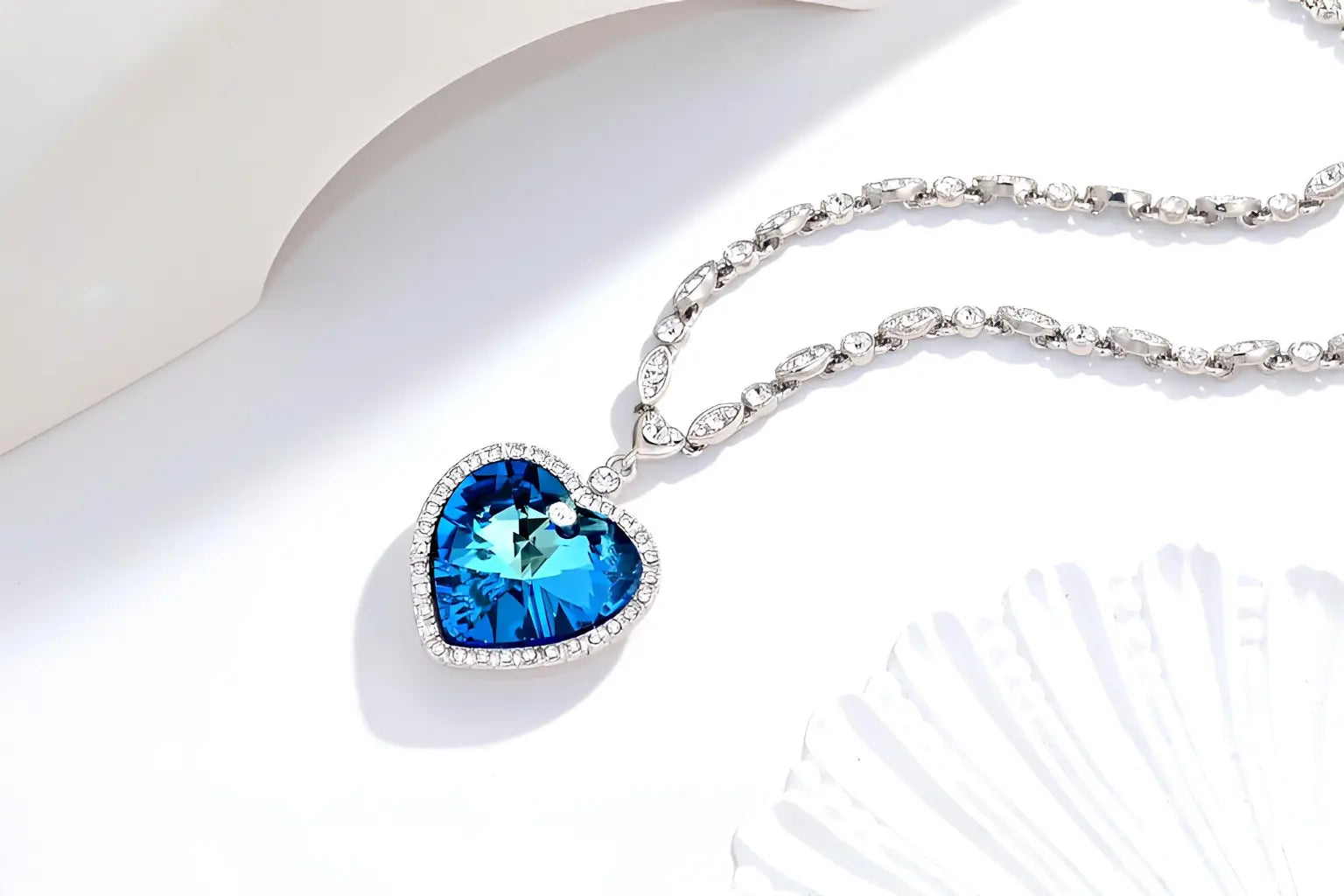
A necklace, a pendant, an amulet, a diamond, a stone, a talisman, a sapphire... the Heart of the Ocean has been described in many ways since Titanic brought the fictional jewel to audiences around the world. Its mystery, symbolism and extraordinary blue color helped make it one of cinema's most recognizable jewels.
This article explores the fictional jewel from Titanic, its place in the film's story, its historical inspirations and the real-world jewels and interpretations that later became associated with its legend.
But where does the story begin, and what is fact, fiction or later interpretation? Let's dive deeper.
🛳️ The Heart of the Ocean in Titanic
Let’s not beat around the bush. The Heart of the Ocean belongs to the fictional story created for James Cameron’s 1997 film Titanic, set against the very real tragedy of the ship’s sinking in 1912. The jewel became one of the film’s most recognizable symbols and is now inseparable from the fictional story of Rose and Jack.
This jewel became a storytelling device of immense symbolic weight in the film. It connects history with emotion, real-life tragedy with fictional passion. It serves not only as a link to the past but as a symbol of what could have been: a love story unfulfilled.

Indeed, without this enigmatic event, one of the greatest directors of our time may never have created the 1997 cinematic masterpiece that immortalized Leonardo DiCaprio and Kate Winslet, or rather, Jack and Rose, the Romeo and Juliet of the 20th century.
For a closer look at Rose as a fictional character and the place the jewel occupies in her story, read our guide to Rose DeWitt Bukater and the story behind Titanic .
The Heart of the Ocean is not only a narrative tool; it's a bridge between fiction and the profound human emotion we associate with the tragedy. It encapsulates the idea that something beautiful can emerge from something tragic, making it even more unforgettable.
More than a cinematic object, it’s a reflection of human longing for love, memory and meaning. It has become a cultural artifact deeply etched into the collective imagination of millions.
📜 How Fiction Turned the Jewel into a Cultural Symbol
Far beyond historical tragedy, it’s James Cameron’s romantic narrative that unleashed emotion and elevated every detail of the film to iconic status: symbols of romance, passion and eternal love.
The jewel was more than a prop; it was a metaphor. It embodied not only the love between two people from different worlds, but the clash between wealth and freedom, expectation and desire. The necklace was a symbol of choice: to conform or to break free.
From dream to nightmare, what remains most vivid is the beauty: Jack’s joy for life, Rose’s grace and fire, and at the center of it all, the Heart of the Ocean, radiant and unforgettable.
And how could we forget Céline Dion’s haunting anthem? "My Heart Will Go On", a hymn to transcendent love that echoes with both sorrow and everlasting devotion.

This fictional context breathed new life into a real maritime disaster, allowing audiences worldwide to emotionally connect with the Titanic through characters and a symbol, the Heart of the Ocean, that would live on in cultural memory.
It also opened a cultural gateway, inspiring fashion, music, exhibitions, jewelry design and fan tributes. The influence of famous cinematic jewels extends far beyond a single film, as explored in our guide to iconic jewelry in cinema .
💙 Did the Heart of the Ocean Ever Exist?
To answer that, we must first ask: which Heart of the Ocean are we talking about?
Is it the fictional jewel gifted to Rose in the film? The sapphire worn by Céline Dion at the 1998 Oscars? The separate blue-diamond tribute worn by Gloria Stuart? Or one of the prop versions created for filming?
There are many layers to this story, and each one reveals a different version of truth, fiction or later interpretation. It’s this complexity that keeps the mystery alive and continues to fascinate fans.
Gemologists, film historians and jewelry writers have long compared the fictional necklace with famous real blue gemstones. That discussion keeps the legend alive in articles, documentaries, exhibitions and popular culture.
1) Historical Inspirations Behind the Heart of the Ocean
The legendary Hope Diamond is frequently cited as an inspiration for the Heart of the Ocean. This genuine 45.52-carat blue diamond originated from a much larger stone brought from India and later became part of the French Crown Jewels.

The Hope Diamond as we know it today appeared in London in the early 19th century and later took its name from collector Henry Philip Hope. Its royal history, extraordinary blue color and aura of mystery made it a natural point of comparison with the fictional jewel in Titanic.
However, the connection is thematic rather than historical. The Hope Diamond was never aboard the Titanic, and the heart-shaped jewel seen in the film is not a replica of the Hope Diamond’s actual cut or setting.
After the film’s success, Asprey created a spectacular high-jewelry interpretation set with a 171-carat Sri Lankan sapphire and 103 natural diamonds. Céline Dion wore this necklace at the 1998 Academy Awards.
Gloria Stuart, who played the elderly Rose, wore a different tribute necklace at the same ceremony: a Harry Winston creation featuring a 15-carat blue diamond. These two jewels are often confused online, but they were separate creations.
Since then, replicas and interpretations have taken on lives of their own, appearing in museums, auctions, private collections and jewelry exhibitions. Their cultural significance comes not only from their materials but from the story with which audiences associate them.
2) Real-World Heart of the Ocean Interpretations
The Heart of the Ocean existed first as a fictional jewel, but the popularity of Titanic quickly inspired a series of real-world interpretations. These ranged from film props and high-jewelry tributes to later pieces created by jewelers for collectors and admirers of the movie.
For filming, production designer Peter Lamont worked with Asprey & Garrard to create several prop versions designed to resemble an exceptional blue diamond necklace on screen. Synthetic blue stones, including cubic zirconia, were used rather than a natural blue diamond of extraordinary value.
For movie historians and fans, the prop seen on Kate Winslet remains the cinematic Heart of the Ocean. The sapphire-and-diamond necklace worn later by Céline Dion and the Harry Winston necklace worn by Gloria Stuart were separate tributes created after the film.
Later interpretations demonstrate the extraordinary cultural reach of the fictional design. What began as a storytelling object developed into a recognizable jewelry motif, reproduced and reinterpreted in many different materials and levels of craftsmanship.
For collectors and film enthusiasts, the significance of these later pieces often lies as much in their connection to the story as in their physical composition. The phenomenon shows how strongly a fictional object can migrate from cinema into wider visual culture.
3) Heart of the Ocean History FAQ
💎 Is the Heart of the Ocean real?
No, there is no historical diamond officially named the Heart of the Ocean connected to the Titanic. The jewel was created for the movie and is often associated with the legendary Hope Diamond. The Hope Diamond is a genuine 45.52-carat blue diamond, but it was never aboard the Titanic.
🌊 Where is the real Heart of the Ocean now?
Because the Heart of the Ocean is fictional, there is no “real” diamond hidden in the ocean or at the Titanic wreck site. The Hope Diamond, which is often cited as an inspiration, can be admired at the Smithsonian National Museum of Natural History in Washington, D.C.
💰 How much was the Heart of the Ocean worth in 1912?
Because the Heart of the Ocean is fictional, it had no real market value in 1912. Any modern estimate is necessarily speculative and would depend on the hypothetical stone’s natural origin, carat weight, color, clarity, provenance and setting. The prop versions made for the film were created as screen jewelry rather than as natural blue-diamond masterpieces.

The illustration above presents a hypothetical valuation only. No real Heart of the Ocean diamond exists, so no definitive market value can be established.
4) The Meaning Behind the Heart of the Ocean
Though it seems secondary at first, the Heart of the Ocean is the emotional thread weaving through Titanic’s entire narrative. It is layered with meaning, complex and symbolic.
- To Cal, it’s a symbol of power and possession, a way to show that Rose belongs to him.
- To Rose, it’s the link between two worlds: the suffocating luxury of her past and the sincerity and freedom Jack represents.
- It is present in the intimate moment where Jack sketches Rose, marking the beginning of their passionate love.
- Later, Cal uses the necklace to frame Jack, falsely painting him as a thief. But in truth, Jack only stole one thing: Rose’s heart.
- Finally, the pendant becomes a symbol of undying love. Rose eventually returns it to the ocean, to the depths where her story with Jack was born.
Each of these meanings adds new emotional depth to the film and to the jewel itself. The Heart of the Ocean becomes more than a beautiful object: it’s a silent witness to passion, betrayal, freedom and loss.
Its presence carries weight, evoking emotions even years later. That is the true legacy of the Heart of the Ocean, one that transcends the screen and enters popular culture.
➡️ That cultural influence is one reason the Heart of the Ocean remains among the most recognizable iconic jewels in modern cinema .
✨ Why the Heart of the Ocean Legend Endures
Few fictional jewels have remained as recognizable decades after their first appearance on screen. The Heart of the Ocean endures because its meaning extends beyond the object itself: it is tied to romance, freedom, memory, loss and one of cinema’s most famous stories.
Its legacy also demonstrates the unusual power of film to transform an imaginary object into a lasting cultural symbol. The original jewel belongs to fiction, while the designs, tributes and interpretations created afterward form part of the wider history inspired by that fiction.
Sources
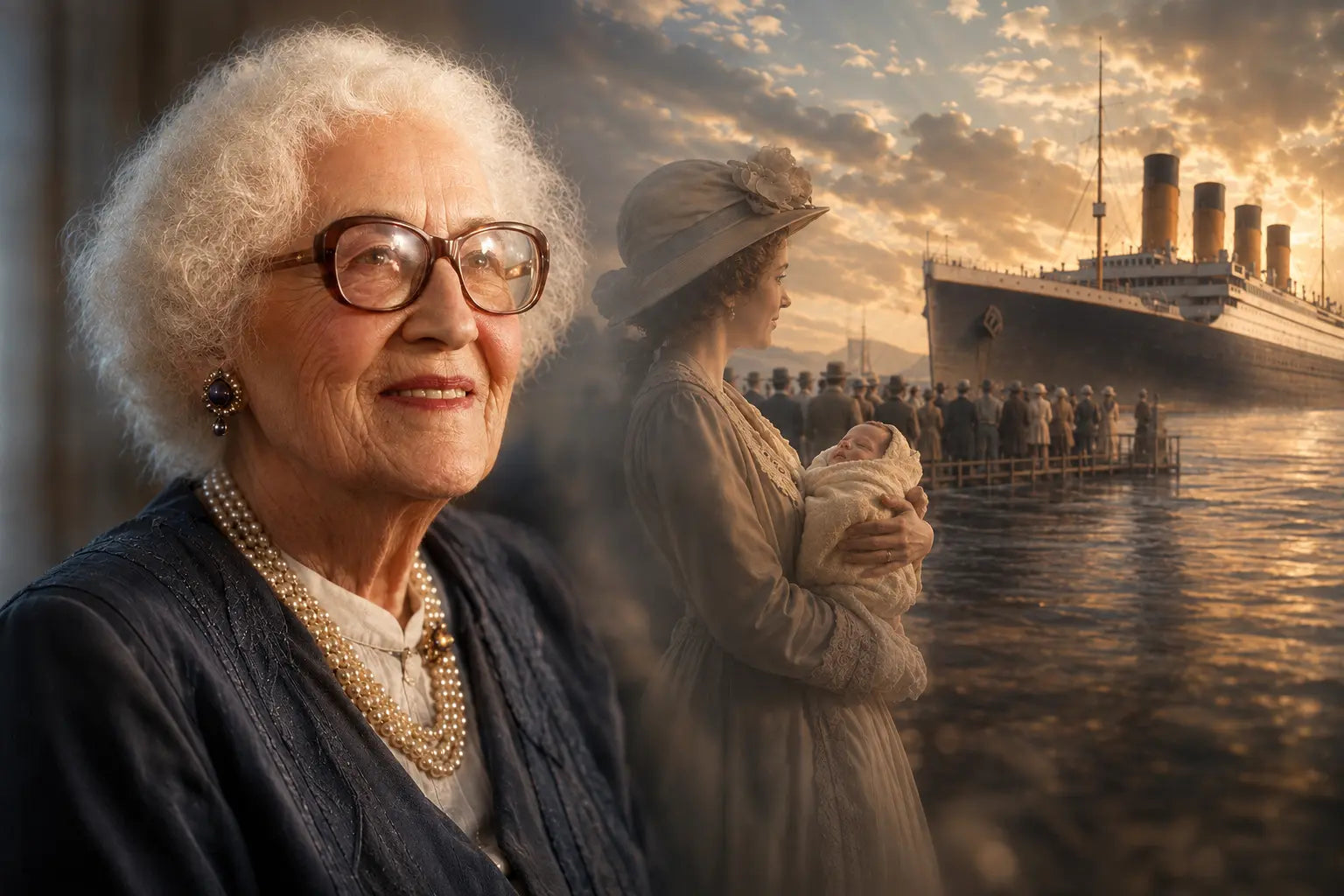
*The visuals featured in this article are original illustrations created by our editorial team with the assistance of artificial intelligence tools. They do not depict the actual people mentioned and do not reproduce any copyrighted material.