
Table of Contents
🕯️ Introduction
Lucy Christina Duff Gordon, better known as Lady Duff Gordon and professionally as Lucile, remains one of the most intriguing women connected to the story of the Titanic. She was not simply a first class passenger who survived the sinking. She was already a celebrated fashion designer, a society figure, and a woman whose name carried real power in the worlds of style, status, and luxury.
That is exactly why her story still attracts so much attention today. People search for Lady Duff Gordon Titanic, Lucy Lady Duff Gordon, Sir Cosmo and Lady Duff Gordon, and even legal or fashion related topics connected to her name. Some want to understand what happened in Lifeboat 1. Others are curious about her role in the rise of modern couture through Lucile, or the lasting significance of Wood v. Lucy, Lady Duff-Gordon.

In this article, we will look at who Lucy Christina Duff Gordon really was, how she became one of the most recognizable women in Edwardian fashion, what happened when she boarded the Titanic with Sir Cosmo Duff Gordon, and why her legacy still lives on at the crossroads of fashion history, social privilege, controversy, and cultural memory.
👒 Who Was Lucy Christina Duff Gordon?
Lucy Christina Duff Gordon, often remembered as Lady Duff Gordon, was far more than a Titanic passenger. Born in 1863 in London, she became one of the best known fashion figures of her era and built a name that carried real influence in British and international high society. In search results, she still appears under several closely related forms, including Lucy Lady Duff Gordon, Lady Lucy Duff Gordon, and Lucy Christina Duff Gordon Titanic, which shows how strongly her identity continues to attract interest.
What makes her story so compelling is that it sits at the intersection of fashion, celebrity, and history. Long before the Titanic disaster, she had already made herself visible in elite circles through style, ambition, and business instinct. She was not simply the wife of Sir Cosmo Duff Gordon. She was a public figure in her own right, one of the few women of her time whose professional name had become a brand.

That professional name was Lucile. Under it, Lucy Christina Duff Gordon helped redefine the image of modern femininity for wealthy clients in London, Paris, New York, and beyond. She understood earlier than most that fashion was not only about clothing. It was also about image, atmosphere, social identity, and desire. That broader vision is one reason her story still feels surprisingly modern today.
In that sense, her world overlaps naturally with other elegant and memorable Titanic figures, including Edith Rosenbaum Russell, whose story also brings together style, status, and survival in the ship’s first class world.

👗 Lucile, Lady Duff Gordon’s Fashion House
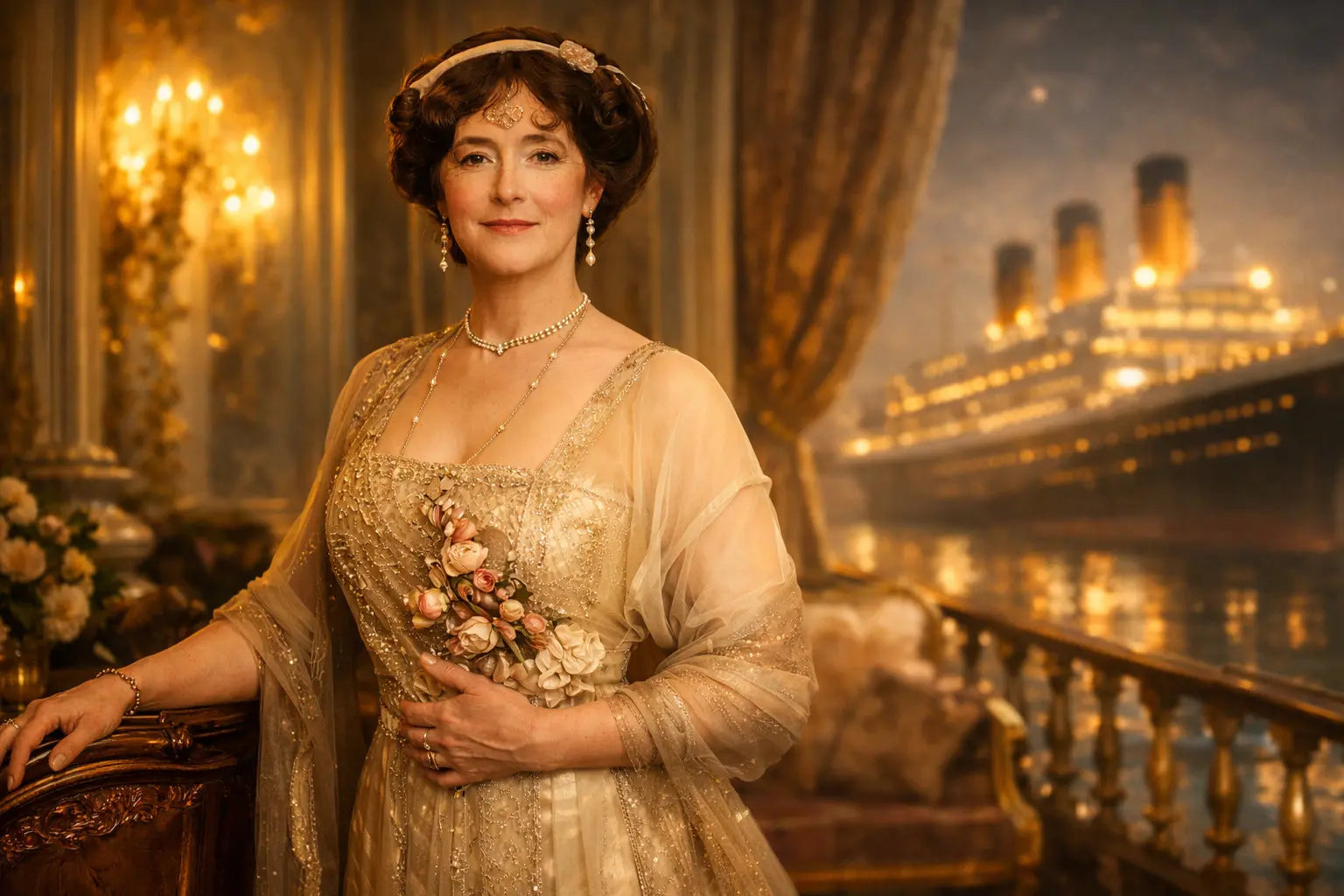
Long before the Titanic, Lucy Christina Duff Gordon had already built a name that carried extraordinary weight in the world of luxury. She worked under the professional name Lucile, and that name became far more than a label on a gown. It became a fashion identity, a social signal, and a symbol of refined femininity for an elite clientele in London, Paris, New York, and beyond.
What made Lucile so distinctive was not simply the beauty of the clothes. Lady Duff Gordon understood that fashion was also about atmosphere, emotion, and performance. Her designs were known for their softness, fluidity, and sensual elegance, but her real genius went further. She helped turn couture into an experience, with dramatic presentations, carefully staged settings, and a style of visual storytelling that feels strikingly modern even now.

That is one reason why searches such as Lady Duff Gordon designs, Lady Duff Gordon dresses, and Lucile Lady Duff Gordon still appear so often. She was not merely dressing wealthy women. She was shaping how fashion could be seen, desired, and remembered. In many ways, she anticipated the modern idea that a designer’s name could become a world of its own.
Her story fits naturally into the broader relationship between jewelry, fashion, and visual culture, much like the themes explored in our article on jewelry in cinema, where style becomes part of the story itself.
🚢 Lady Duff Gordon on the Titanic
When Lucy Christina Duff Gordon boarded the Titanic in April 1912, she was already a well known public figure. She was travelling with her husband, Sir Cosmo Duff Gordon, and her secretary, Laura Mabel Francatelli, while crossing to the United States in connection with business related to the New York branch of Lucile. Contemporary accounts also note that the Duff Gordons travelled under the alias Mr. and Mrs. Morgan, a detail that still adds to the intrigue surrounding Lady Duff Gordon on the Titanic.
Her presence on board fits perfectly with the world that still defines the Titanic in popular memory: first class luxury, society names, couture, wealth, and carefully staged elegance. Lady Duff Gordon was not just another prominent passenger. She represented the kind of glamour that made the ship feel like a floating symbol of Edwardian privilege. That is one reason why her story continues to attract readers who are interested not only in the sinking itself, but also in the social world that existed on board before disaster struck.

On the night of the sinking, Lucy Christina Duff Gordon survived alongside Sir Cosmo Duff Gordon and Francatelli in Lifeboat No. 1. The fact that she did survive explains why so many people still search for questions such as whether Lady Duff Gordon survived the Titanic or how she escaped. Yet her name did not remain famous simply because she lived. What followed after the sinking, especially the debate around that lifeboat, would shape how history remembered her.
➡️ Like the finest first class details that made the Titanic world so unforgettable, discover the Heart of the Ocean necklace, a jewel inspired by elegance, prestige, and timeless emotion.
⚖️ Lifeboat 1 and the Lady Duff Gordon Case
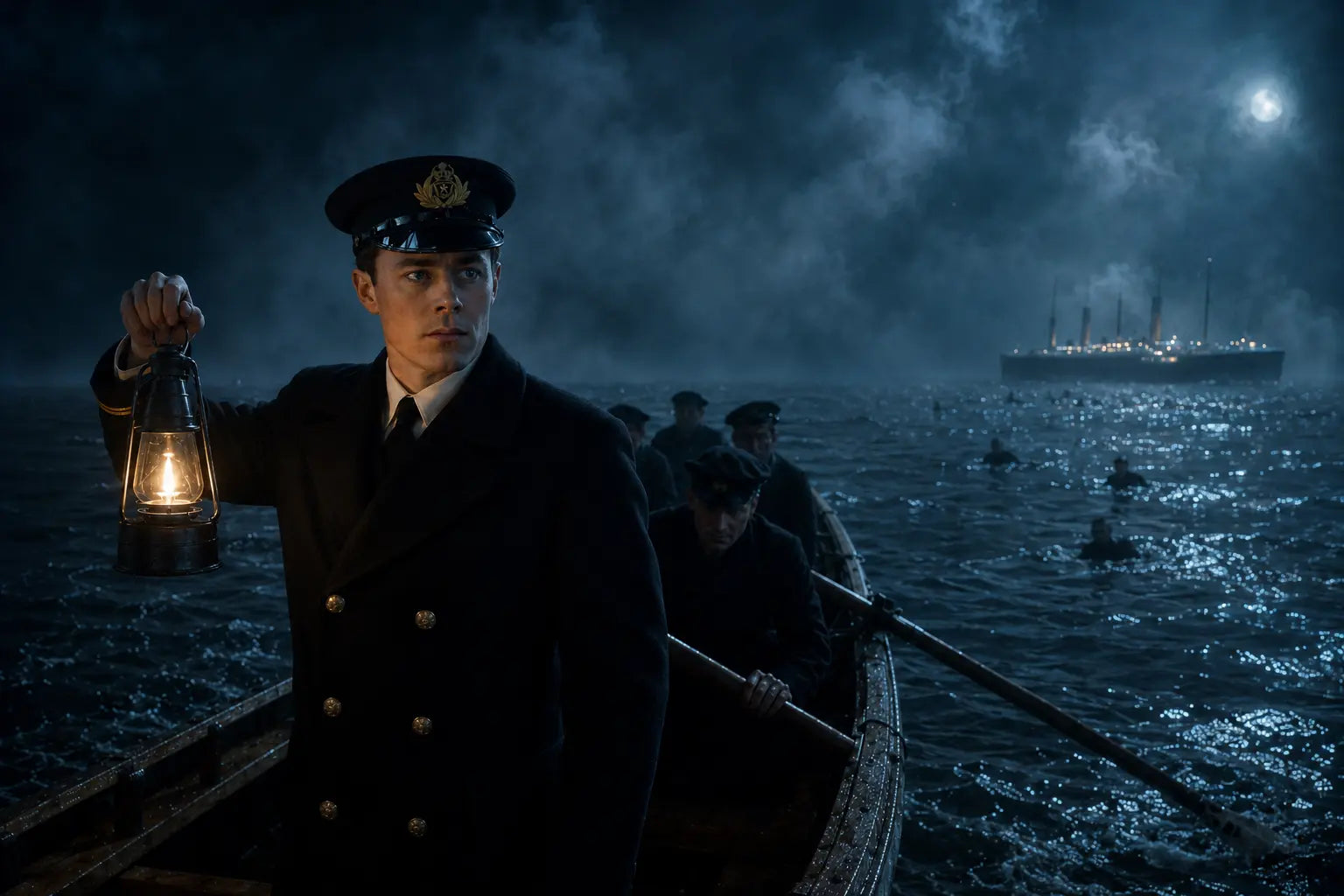
The part of Lucy Christina Duff Gordon’s story that still sparks the most debate is her connection to Lifeboat 1. On the night of the sinking, Lady Duff Gordon, Sir Cosmo Duff Gordon, Laura Mabel Francatelli, and several crewmen left the ship in this small emergency boat. What made the moment so controversial was not simply that they survived. It was the fact that Lifeboat 1 left with only 12 people on board, even though it had space for 40. That detail shocked the public and quickly turned the episode into what many people still think of as the Lady Duff Gordon case.
The controversy grew even more intense after it emerged that Sir Cosmo Duff Gordon gave £5 to each crewman from the boat after the rescue. To some observers, that looked like a humane gesture toward men who had lost their belongings and their employment when the Titanic went down. To others, it looked suspicious, as if money had been used to discourage the crew from rowing back toward people in the water. That is why the Lifeboat 1 episode has remained such a lasting part of the Duff Gordon legacy.

The British inquiry later rejected the harshest accusation. Its report stated that the claim that Sir Cosmo had bribed the men to row away from the drowning was unfounded. At the same time, the inquiry also concluded that the boat might have saved additional people if it had returned to the wreck area. That combination matters because it explains why the story remains morally unsettling even without a formal finding of bribery. The Duff Gordons were not condemned by the inquiry in the way newspapers had implied, yet public suspicion never fully disappeared.
➡️ Like the pieces that carry both beauty and emotional weight, discover the Heart of the Ocean bracelet, a jewel inspired by memory, elegance, and the lasting aura of Titanic history.
💼 Sir Cosmo and Lady Duff Gordon
To understand why the controversy lasted so long, it helps to look at the couple themselves. Sir Cosmo and Lady Duff Gordon belonged to a privileged, highly visible world of wealth, status, and social influence. He was an aristocrat and sportsman. She was already internationally known through Lucile, her couture name. Together, they represented exactly the kind of first class glamour that the public would later associate with both the brilliance and the moral unease of the Titanic story.
After the disaster, public reaction was shaped not only by what happened in Lifeboat 1, but by what the Duff Gordons seemed to represent. In newspaper coverage, they quickly became a symbol of the uncomfortable contrast between luxury and catastrophe. A partly empty lifeboat carrying titled, wealthy passengers was bound to provoke intense anger at a time when so many others had been left behind. That is one reason why searches for Sir Cosmo and Lady Duff Gordon or Lady Cosmo Duff Gordon still appear so often today.

The couple’s social position made every detail look more charged. Sir Cosmo’s payment to the crew, whether intended as generosity or not, was never going to be received neutrally once the wider public learned about it. In historical memory, that moment came to stand for something larger than one boat or one conversation. It became a question about class, responsibility, and how privilege is judged in times of disaster. In that sense, the Duff Gordons occupy a place in Titanic history very different from figures remembered more straightforwardly for duty or sacrifice, such as Caledon Hockley, who, while fictional, embodies a similar image of wealth and cold social power in the Titanic imagination.
📚 Wood v. Lucy, Lady Duff-Gordon
Beyond the Titanic, Lucy Christina Duff Gordon is also remembered for a very different reason: a legal case that became one of the most famous contract law decisions in the United States. Known as Wood v. Lucy, Lady Duff-Gordon, the case was decided by the New York Court of Appeals in 1917 and is still taught today because of the way it explains implied obligations in a business agreement.
The dispute grew out of Lady Duff Gordon’s commercial value as a fashion name. As the court itself noted, she styled herself as “a creator of fashions”, and her approval could increase the appeal and sale of products. She had given Otis F. Wood the exclusive right, subject to her approval, to market her endorsements and related business opportunities, but later challenged whether the agreement imposed any real obligation on Wood.

What made the case so important was Cardozo’s reasoning. Even though the contract did not spell out every duty in explicit detail, the court held that Wood’s acceptance of the exclusive agency carried an implied promise that he would use reasonable efforts to market Lady Duff Gordon’s name and endorsements. In other words, the agreement had business meaning even without rigidly stated language on every point. That principle helped make Wood v. Lucy, Lady Duff-Gordon a foundational case in modern contract law.
The case also reveals something important about Lucy Christina Duff Gordon herself. She was not only a society woman or a Titanic survivor. By the 1910s, her name had become commercially powerful enough to sit at the center of a major legal dispute about branding, licensing, and fashion business. That alone says a great deal about how modern her career really was. Her couture world, built under Lucile, had already turned personal identity into something that could be marketed, protected, and fought over in court.
🎬 Lady Duff Gordon in Titanic Movies and Popular Culture
Lady Duff Gordon did not remain only a historical figure buried in inquiry records and fashion archives. Over time, she also became part of the wider cultural memory of the Titanic. That is why search terms like Lady Duff Gordon Titanic movie still appear so often. Her story combines all the elements that continue to fascinate modern audiences: glamour, first class privilege, controversy, survival, and the haunting afterlife of the ship itself.
In James Cameron’s Titanic, Lady Duff Gordon appears among the first class passengers who help give the film its sense of social realism. She is not a central character, but her presence matters because it reminds viewers that the Titanic was filled with real people whose names already carried influence long before the disaster. For that reason, Lucy Christina Duff Gordon remains one of the most recognizable historical women tied to the ship, especially for readers interested in the overlap between fashion, class, and public image.

Her continued presence in popular culture also comes from the fact that she belongs to more than one story at once. She is part of fashion history through Lucile, part of Titanic history through Lifeboat 1, and part of legal history through Wood v. Lucy, Lady Duff-Gordon. Few figures from the ship move so easily between these different worlds. That layered legacy makes her especially compelling for documentaries, biographies, period dramas, and Titanic related commentary.
In many ways, her image fits naturally into the same world of beauty, symbolism, and visual memory explored in our article on jewelry beyond the screen, where elegance becomes part of a larger emotional mythology.
➡️ Like the refined details that continue to define the Titanic dream, discover the Heart of the Ocean earrings, delicate jewels inspired by light, grace, and timeless sophistication.
🕊️ How Lady Duff Gordon Died
Long after the Titanic disaster, Lucy Christina Duff Gordon continued to live a life shaped by fashion, writing, and public recognition. Many readers still search for how Lady Duff Gordon died or wonder what became of the woman who had been a celebrated fashion designer, a Titanic survivor, and a controversial society figure. She died in London on April 20, 1935, at the age of 71.
Biographical records indicate that Lady Duff Gordon died of breast cancer, with pneumonia as a complication. That final chapter stands in sharp contrast to the glamorous image she had built around the name Lucile, an image shaped by luxury, femininity, theater, and modern style. Even after the decline of her fashion house, her name remained associated with a world where elegance, fame, and personal branding were already beginning to look surprisingly modern.

What makes her story so unusual is precisely that contrast between public brilliance and a more complicated historical memory. Lucy Christina Duff Gordon was never remembered for one reason alone. She left a mark on fashion history, on Titanic history, and even on legal history. Her death in 1935 did not diminish that legacy. If anything, it fixed her image in the public imagination as a woman suspended between prestige, scandal, and lasting fascination.
💎 Why Lady Duff Gordon’s Story Still Matters
If Lucy Christina Duff Gordon still attracts attention more than a century after the Titanic, it is because her story brings together several worlds that rarely meet in one person. She was a fashion creator, a society figure, a survivor of one of the most famous disasters in history, and a woman whose name remained tied to controversy long after the sinking. Very few Titanic passengers combine so many themes at once.
Her story also endures because it resists simple judgment. Lady Duff Gordon does not fit neatly into the category of unquestioned heroines, nor into that of figures entirely condemned by history. She remains more complex than that, suspended between elegance, privilege, survival instinct, public image, and moral ambiguity. That is exactly why searches for Lady Duff Gordon Titanic, Lucy Lady Duff Gordon, and Lady Duff Gordon case still continue today.

There is also the fact that her importance reaches far beyond the sinking itself. Through Lucile, she helped shape modern fashion as a language of image, desire, and identity. Through Wood v. Lucy, Lady Duff-Gordon, she became part of a legal legacy still studied today. And through the Titanic, she entered a collective memory where glamour, tragedy, class, and scandal remain tightly intertwined. That combination explains why her name still appears in books, documentaries, fashion history, and Titanic commentary.
Her story also belongs to the larger visual mythology of the Titanic, where elegance and symbolism remain central. That same atmosphere can be felt in our article on Rose and the Titanic legend, where beauty, status, and memory become part of the same emotional world.
➡️ Like the most refined pieces that keep their glow across time, discover the Heart of the Ocean ring, a jewel inspired by elegance, distinction, and the timeless aura of Titanic history.
❓ FAQ About Lady Duff Gordon and the Titanic
Who was Lucy Christina Duff Gordon?
Lucy Christina Duff Gordon, also known as Lady Duff Gordon and professionally as Lucile, was a British fashion designer, society figure, and Titanic survivor. She became famous for her couture house, her influence on early modern fashion, and the controversy that followed her survival of the sinking.
Did Lady Duff Gordon survive the Titanic?
Yes, Lady Duff Gordon survived the Titanic. She escaped the ship with her husband Sir Cosmo Duff Gordon and Laura Mabel Francatelli in Lifeboat 1, the same boat that later became the center of public controversy.
Who was Lady Duff Gordon’s husband?
Lady Duff Gordon’s husband was Sir Cosmo Duff Gordon. After the sinking, both of their names became closely linked to the debate surrounding Lifeboat 1 and the way their survival was viewed by the public.
Why is Lady Duff Gordon connected to controversy on the Titanic?
Lady Duff Gordon is connected to controversy because she and her husband left the Titanic in Lifeboat 1, which was launched with far fewer people than it could have carried. The debate became even stronger after Sir Cosmo gave money to members of the boat’s crew, a gesture that was interpreted in different ways and remained controversial for years.

What was Lifeboat 1 on the Titanic?
Lifeboat 1 was one of the Titanic’s most debated lifeboats because it left the ship with very few people on board, even though many more could potentially have been taken. That fact made it one of the most discussed episodes in the history of the disaster.
What was Lucile, Lady Duff Gordon’s fashion house?
Lucile was the professional name under which Lucy Christina Duff Gordon built her couture reputation. Her fashion house became famous for elegant dresses, theatrical presentations, and a highly refined image that helped shape modern ideas of luxury fashion.
Did Lady Duff Gordon appear in the Titanic movie?
Yes, Lady Duff Gordon appears in James Cameron’s Titanic. She is portrayed as one of the real first class passengers, which helped keep her name visible in popular culture for modern audiences.
What is Wood v. Lucy, Lady Duff-Gordon?
Wood v. Lucy, Lady Duff-Gordon is a famous legal case in contract law. It is often studied because it helped establish the idea that a contract can include obligations that are implied by its overall meaning, even when they are not spelled out in exact detail.
How old was Lady Duff Gordon on the Titanic?
Lucy Christina Duff Gordon was born in 1863. Since the Titanic sank in 1912, she was 48 years old at the time of the disaster.
How did Lady Duff Gordon die?
Lady Duff Gordon died in London in 1935. Her death came many years after the Titanic disaster, but by then her name was still associated with fashion, celebrity, and the controversy of Lifeboat 1.

Why is Lady Duff Gordon still famous today?
Lucy Christina Duff Gordon is still remembered because her name brings together fashion history, Titanic history, social privilege, public controversy, and legal legacy. Few figures connected to the Titanic remain relevant in so many different fields at once.
✨ Conclusion About Lady Duff Gordon and the Titanic
The story of Lucy Christina Duff Gordon shows how some Titanic lives cannot be reduced to the sinking alone. With Lady Duff Gordon, we are not looking only at a survivor, but also at a major fashion creator, a powerful businesswoman, and a woman whose name remains tied to both elegance and controversy.
Her legacy still fascinates because it brings together everything that continues to draw people into the world of the Titanic: luxury, celebrity, social status, scandal, and memory. Between Lucile, Lifeboat 1, her marriage to Sir Cosmo Duff Gordon, and the lasting importance of Wood v. Lucy, Lady Duff-Gordon, she remains one of the most complex and compelling figures connected to the ship.

*The visuals featured in this article are original illustrations created by our editorial team with the assistance of artificial intelligence tools. They do not depict the actual people mentioned and do not reproduce any copyrighted material.